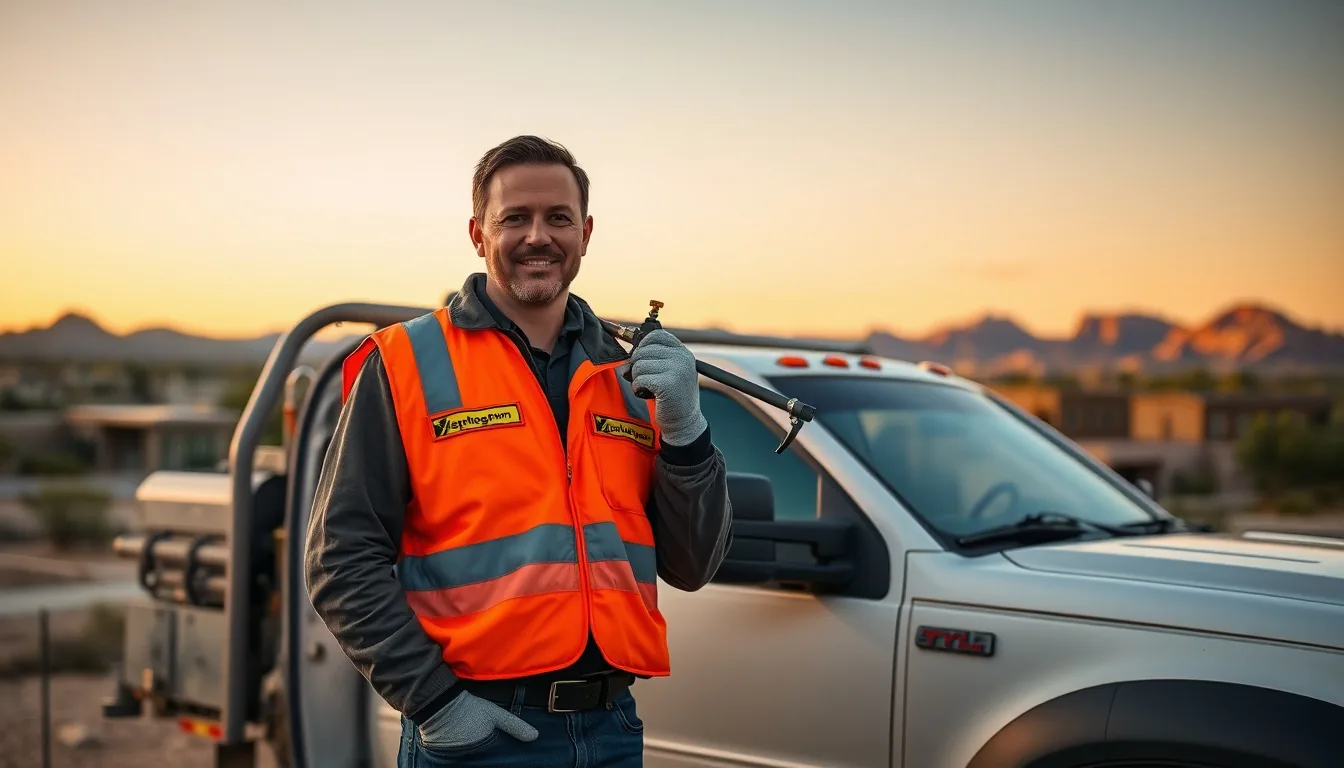
About the Company
Built for desert ground, not adapted to it
National franchises bring Midwest playbooks to Arizona soil. We started from the caliche up: collapsible soils, monsoon washout, and the physics of putting the lightest possible material under a slab that just proved its ground can't carry weight.
Why We Exist
Arizona settlement is a soil problem wearing a concrete costume
Most concrete repair content on the internet is written for places with topsoil and basements. Arizona has neither. Our slabs sit on alluvial fan deposits that collapse on first wetting, caliche ledges that bear unevenly, and — across more than 3,000 square miles of the state — ground that is measurably sinking from groundwater withdrawal.
That's why every estimate we run starts with the ground, not the concrete. Where does the water come from? What does the settlement pattern say about the mechanism underneath? Is this lot in an AZGS fissure study area? Then — and only then — do we talk about lift heights and prices.
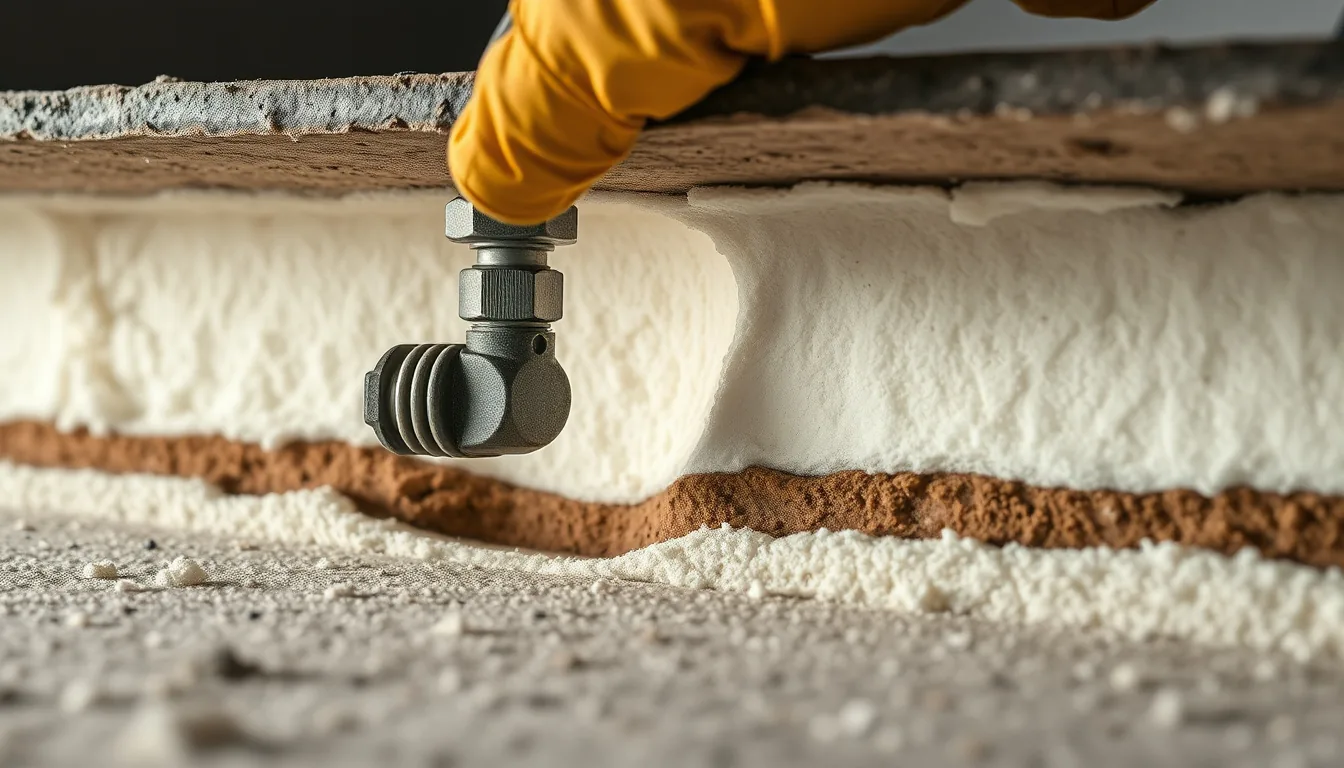
The method follows the soil: polyurethane foam at about 2 pounds per cubic foot, injected through dime-size holes, cured in 15 minutes, waterproof against the next monsoon. Statewide, from Phoenix and Queen Creek to Tucson, Flagstaff, and Yuma.
The honest-scoping rule
We don't lift slabs across active fissure traces, we don't chase structural foundation movement with flatwork foam, and we don't level rubble. When your project needs a geotechnical engineer or a re-pour instead of us, we say so at the free inspection — because the referrals that honesty earns are worth more than any single job.
How We Work
Three commitments on every job
Measured, not eyeballed
Elevation mapping before drilling, gauge-monitored lifts during, and written before/after measurements when we leave.
Fix the water, not just the slab
Every lift includes joint sealing, and every estimate names the water source feeding the settlement. That's what makes repairs permanent on desert soil.
Fixed price before we drill
Free inspections, fixed quotes, no discover-more-once-we-start games. If scope changes underground, we stop and talk first.
By the Numbers
The engineering facts we work from
15 min
foam cure to roughly 90% strength — walk immediately, drive same day
~2 lb
per cubic foot of foam vs 100+ for mud slurry — no re-loading failed soil
1/4"
the ADA vertical-change threshold every walkway lift is corrected to
100%
of jobs logged: injection points, volumes, and before/after elevations
Why Polyurethane
The lightest possible fix for the weakest possible soil
Here is the whole argument in one sentence: your slab sank because the soil under it could not carry the load, so the last thing that soil needs is more load. Traditional mudjacking pumps a cement-and-sand slurry that weighs over a hundred pounds per cubic foot back onto that same failed ground. It lifts the slab today and re-loads the problem for tomorrow, which is why mudjacking repairs so often fail within five to ten years.
Polyurethane foam weighs roughly two pounds per cubic foot — about two percent of the slurry's weight — and it does its work by expansion, not mass. It flows into the voids, fills them, and raises the slab with pressure while adding almost nothing to the burden the soil already failed to carry. It cures closed-cell and waterproof in about fifteen minutes, so the next monsoon can't dissolve it the way water erodes slurry.
None of that is proprietary magic. It is the same chemistry used to stabilize highways, airport aprons, and buried pipelines. What we add is the judgment to apply it correctly to Arizona's specific soils — and the honesty to tell you when it's the wrong tool.
The flagship of a statewide network
Arizona Concrete Lifting is built to serve the whole state and to anchor a growing network of city-focused crews — from the Phoenix metro to Tucson, Flagstaff, and the fast-growing Southeast Valley. One standard of work, one method philosophy, everywhere the desert ground moves.
Arizona ROC standards
Concrete repair work in Arizona falls under the Registrar of Contractors' concrete classifications (C-9 / R-9 / CR-9) — always verify any contractor's license at roc.az.gov before they drill.
Statewide dispatch
Phoenix metro daily, Tucson weekly, and routed dispatch to Flagstaff, Prescott, Yuma, and rural Arizona.
Talk to a crew lead
844-967-5247 — real scheduling, real answers. Or josh@contractorschoiceagency.com if you'd rather write.
Sunken concrete? Get it lifted this week.
Free estimates statewide. Most residential lifts finished in under a day — driveable in 15 minutes.