Statewide Concrete Lifting — Arizona
Sunken concrete, lifted level in hours
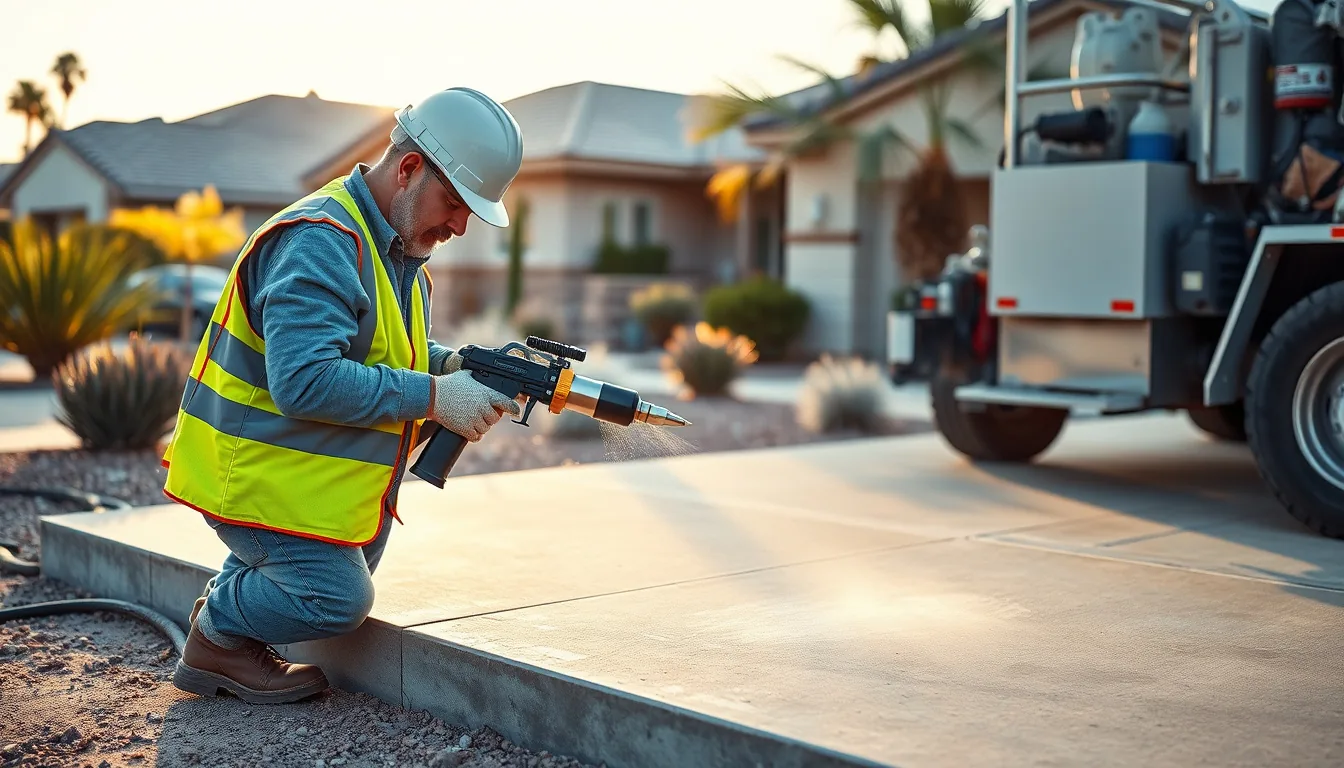
Polyurethane foam injection raises settled driveways, pool decks, patios, and warehouse floors through dime-size holes — cured in 15 minutes, at a fraction of replacement cost. Engineered for Arizona's collapsible soils, caliche, and monsoon washout.
15-min cure
walk on it immediately, drive same day
5/8" holes
dime-size, color-match patched
Fraction of replacement
keep the slab and finish you own
The Arizona Problem
Desert ground doesn't behave like ground anywhere else
Arizona slabs sit on collapsible alluvial soils that stand firm for decades — then compact suddenly the first time a monsoon storm, a new drip line, or a slab leak soaks them. Caliche hardpan makes slabs bear unevenly. And groundwater pumping has measurably sunk more than 3,000 square miles of the state.
- Collapsible soils: firm dry, gone after the first real wetting
- Caliche lenses: rock-hard under one corner, soft pocket under the next
- Monsoon washout: a third of Phoenix's annual rain in violent weeks
- New-build fill in Queen Creek & Buckeye consolidating for its first 2–7 years
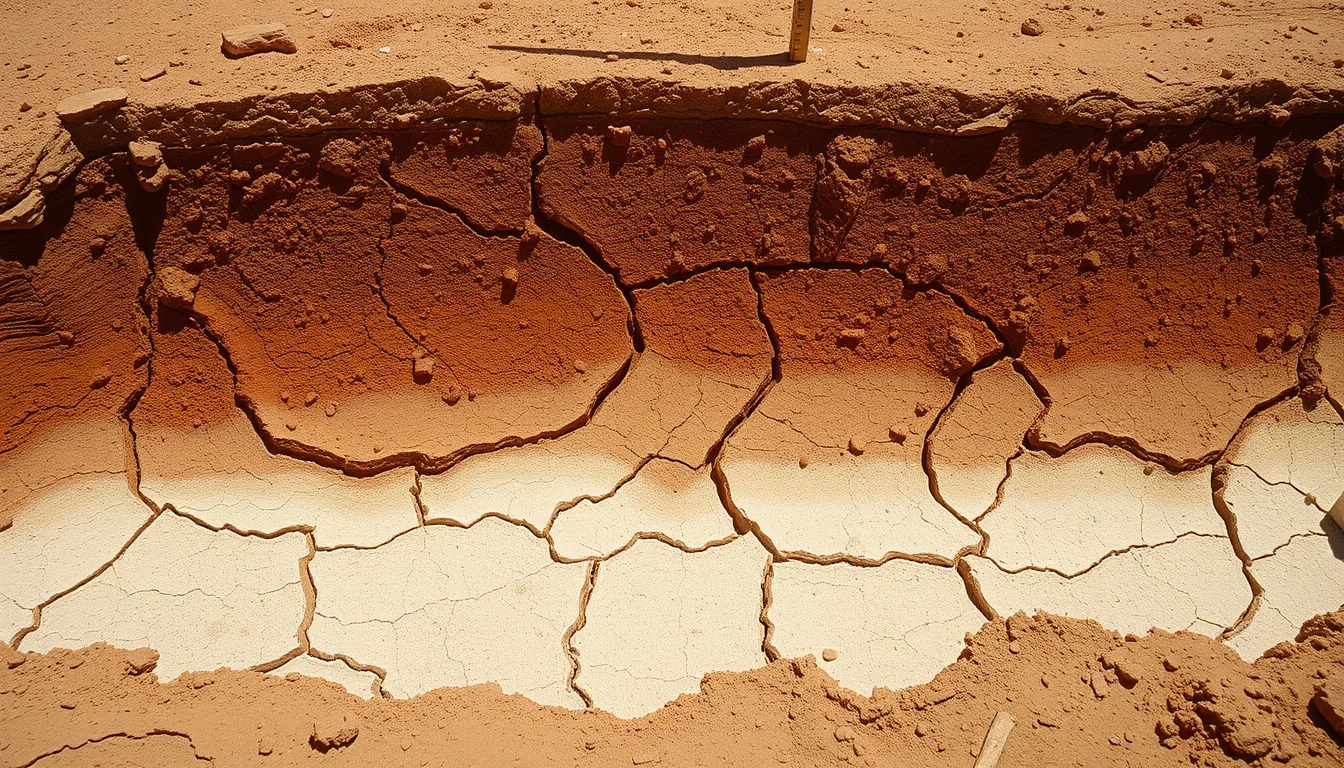
Caliche hardpan — the desert's fake bedrock
Know Your Options
Polyjacking vs mudjacking vs replacement
What we do
Polyjacking
- $5–$25 / sq ft
- 15-minute cure
- 5/8" holes
- ~2 lb/cu ft — no soil re-load
- Waterproof, effectively permanent
The old way
Mudjacking
- $3–$6 / sq ft
- 1–3 day cure
- 1–2" holes
- 100+ lb/cu ft on failed soil
- Commonly fails in 5–10 years
Last resort
Replacement
- 2–4× the cost of lifting
- Days of demo + cure
- Full tear-out through caliche
- Finish never matches
- Re-settles on the same bad soil
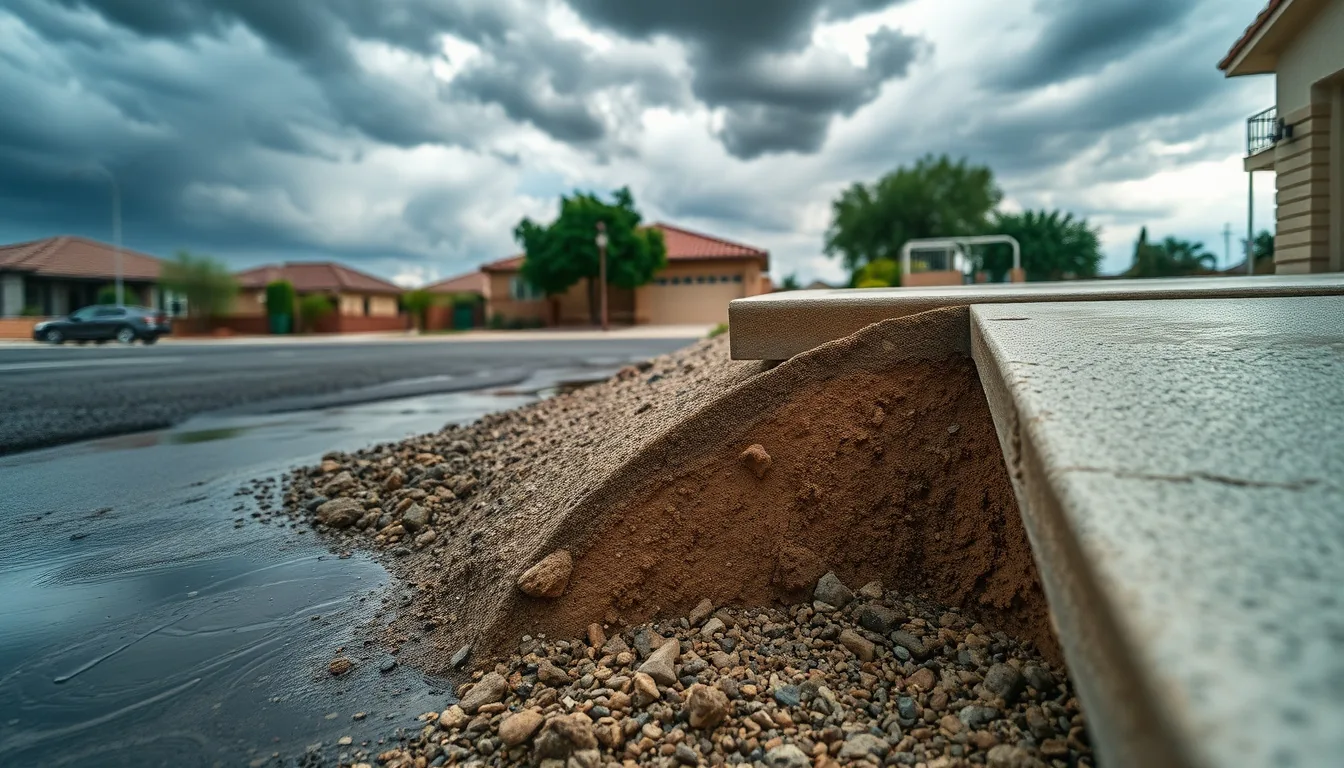
Every Monsoon Season
One storm can wash out the base under a slab overnight
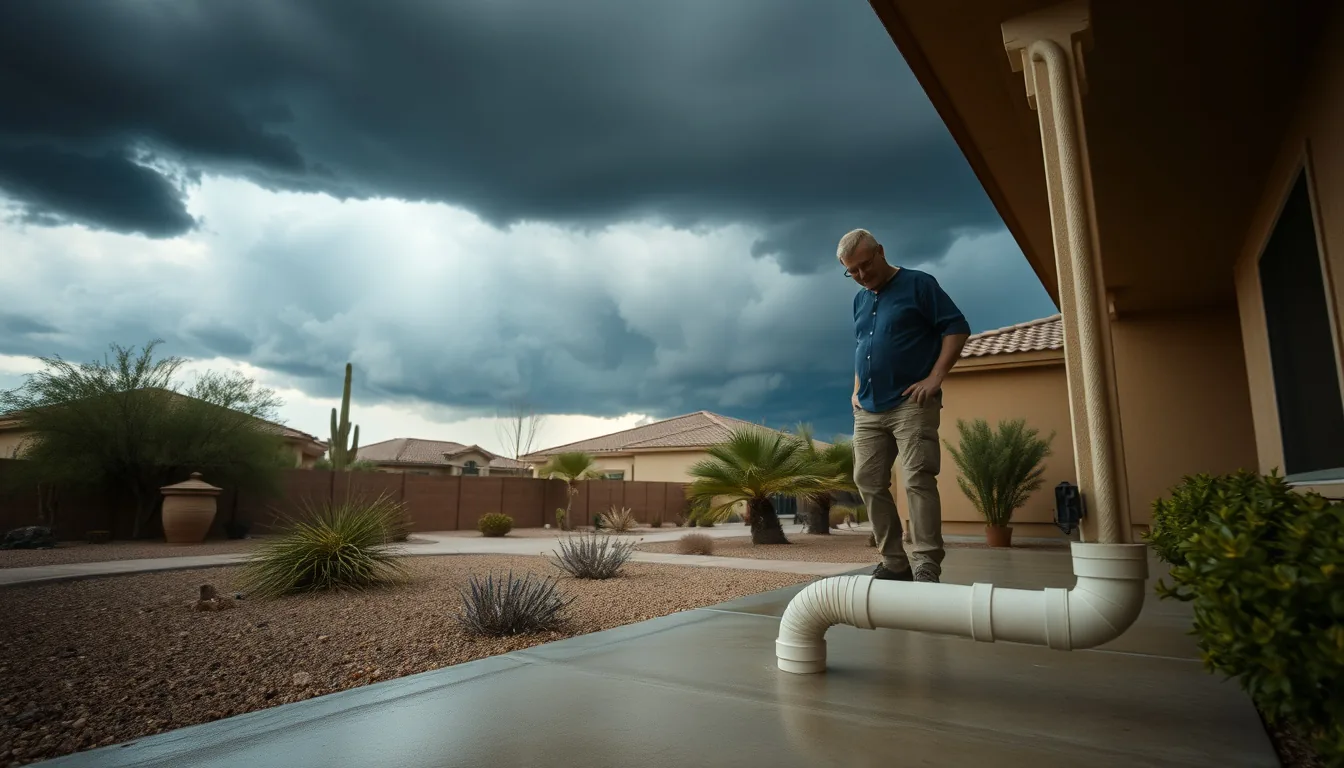
Monsoon flow scours the fill from under driveway edges, dumps off roof scuppers onto patios, and opens voids you can't see until the concrete drops. September and October are void season — we fill them before the slab cracks.
Void Filling & StabilizationWhat We Lift
Every slab on the property
From a single sunken sidewalk flag to a warehouse aisle under forklift traffic — if it's concrete and it moved, we level it.
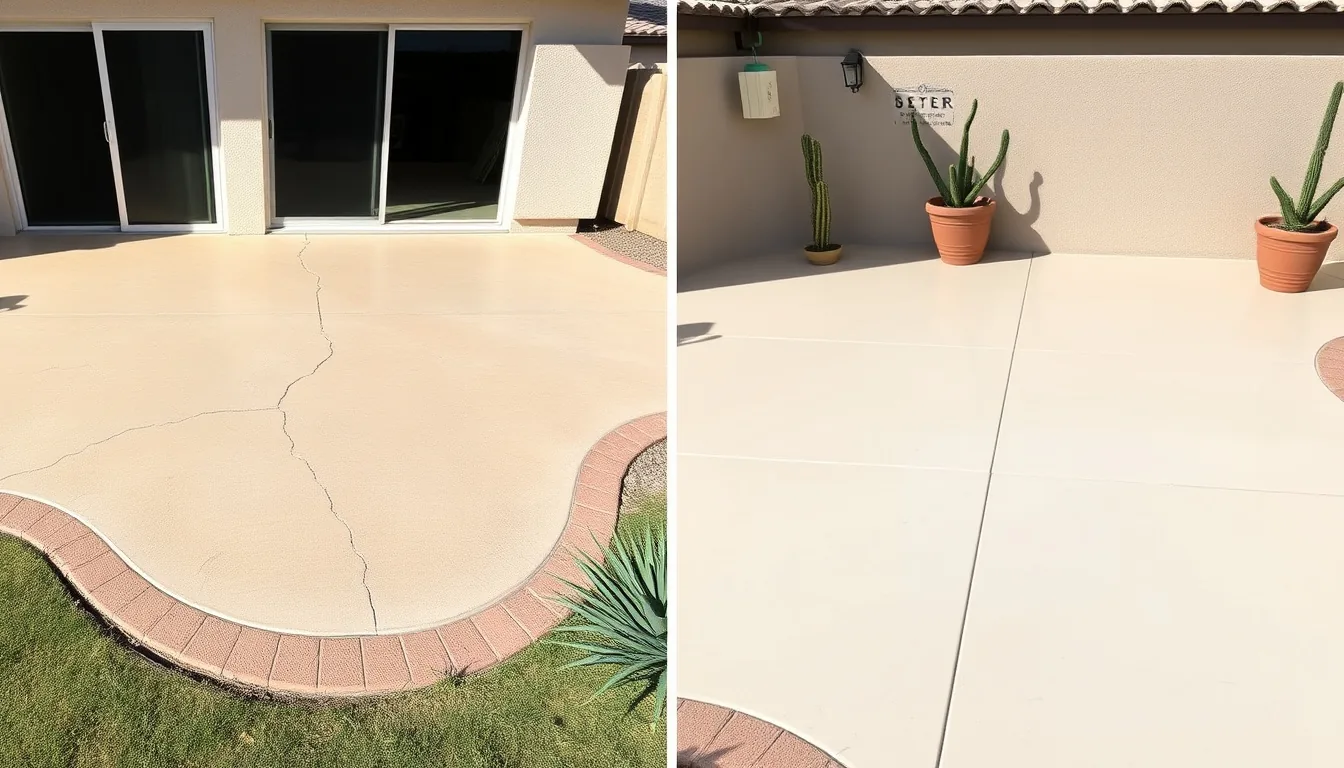 BeforeAfter
Precision Results
Lifted in controlled increments, measured in fractions of an inch
Every lift is mapped with levels before we drill, injected in small monitored shots, and verified against the surrounding slabs. The goal isn't “better” — it's back to the grade the concrete was poured at, with drainage running the direction the builder intended.
- Elevation mapping before any drilling starts
- Controlled lifts monitored with gauges in real time
- Joints caulked and cracks sealed on every job
- Before/after measurements documented in writing
Commercial, HOA & municipal: a 1/4-inch edge is a lawsuit waiting
ADA standards flag any vertical change of 1/4 inch or more as a trip hazard — and in Phoenix, City Code §31-55 puts sidewalk injury liability on the abutting property owner, not the city. We run survey-and-lift programs with dated correction logs that close the legal exposure before anyone falls.
Statewide Dispatch
One crew network, all of Arizona
Phoenix metro daily. Tucson weekly. Flagstaff, Prescott, Yuma and everywhere between on statewide dispatch.
The Process
Drilled, lifted, sealed — usually before lunch
Map the settlement
Levels and elevation readings across every affected slab — plus void sounding.
Drill dime-size holes
5/8" injection points placed on the settlement pattern, not a generic grid.
Inject & lift
Expanding foam in small monitored shots until the slab is back to grade.
Patch & seal
Color-matched hole patches, joints caulked, drainage flagged in writing.
Straight Answers
What Arizona asks before the drill comes out
Costs, cure times, caliche, monsoon washout — the full FAQ hub covers 26 questions.
Browse All FAQsMost residential projects land between roughly $661 and $1,868, with an average around $1,200; small single-slab lifts can run as little as ~$325. Price is driven by how far the slab has sunk and how much material the voids swallow — which is why we quote from a free on-site inspection.
Mudjacking pumps heavy cement slurry through 1–2 inch holes and needs 1–3 days to cure; polyjacking injects expanding polyurethane foam through 5/8-inch holes and cures in about 15 minutes. Foam weighs about 2 lb per cubic foot versus 100+ for slurry, so it doesn't re-load the weak soil that caused the sinking.
Desert valley soils are mostly collapsible alluvial deposits — firm while dry, then compacting suddenly when irrigation, a leak, or monsoon rain soaks them. Add caliche hardpan bearing slabs unevenly and regional groundwater subsidence, and Arizona slabs settle differently than anywhere else.
Almost immediately. The foam reaches roughly 90% strength in about 15 minutes — walk on it right away, drive on it the same day. Mudjacking slurry, by contrast, typically needs 24–72 hours.
Almost always — leveling generally runs a fraction of tear-out and re-pour, and you keep your existing finish. Replacement also means demolition through caliche, haul-off, days of cure time, and new concrete that never matches the old.
From the Blog
Concrete intelligence for desert ground
Sunken concrete? Get it lifted this week.
Free estimates statewide. Most residential lifts finished in under a day — driveable in 15 minutes.