Monsoon-Proofing Your Concrete: A Pre-Season Checklist for Arizona Homeowners
Every summer, Arizona runs the same experiment: take soil that has been bone-dry for nine months, then hit it with a third of the year's rainfall in a handful of violent storms. Your concrete sits on top of that experiment. The homeowners who walk their property in May and June spend a few dollars on caulk. The ones who do not sometimes spend a few thousand on lifting in October.
Here is how the monsoon attacks concrete, and the pre-season checklist that stops most of the damage before it starts.
Monsoon 101: What You Are Actually Preparing For
The National Weather Service defines the monsoon season with fixed dates: June 15 through September 30. In an average year, Phoenix picks up roughly 2.5 inches of rain during those weeks — about a third of its annual total — while Tucson gets closer to 6 inches, nearly half its annual precipitation.
The totals are not the problem. The delivery is. Monsoon rain arrives in short, intense bursts that overwhelm scuppers, sheet across hardscape, and concentrate flow along curb lines and slab edges. Dry desert soil sheds the first minutes of a downpour like pavement, so the water runs — and running water finds the edges of your concrete.
How Storm Water Gets Under a Slab
Water does not hurt concrete from the top. It hurts it from below, four main ways:
- Open joints and cracks. Every unsealed expansion joint and hairline crack is a drain routed directly into the soil beneath the slab.
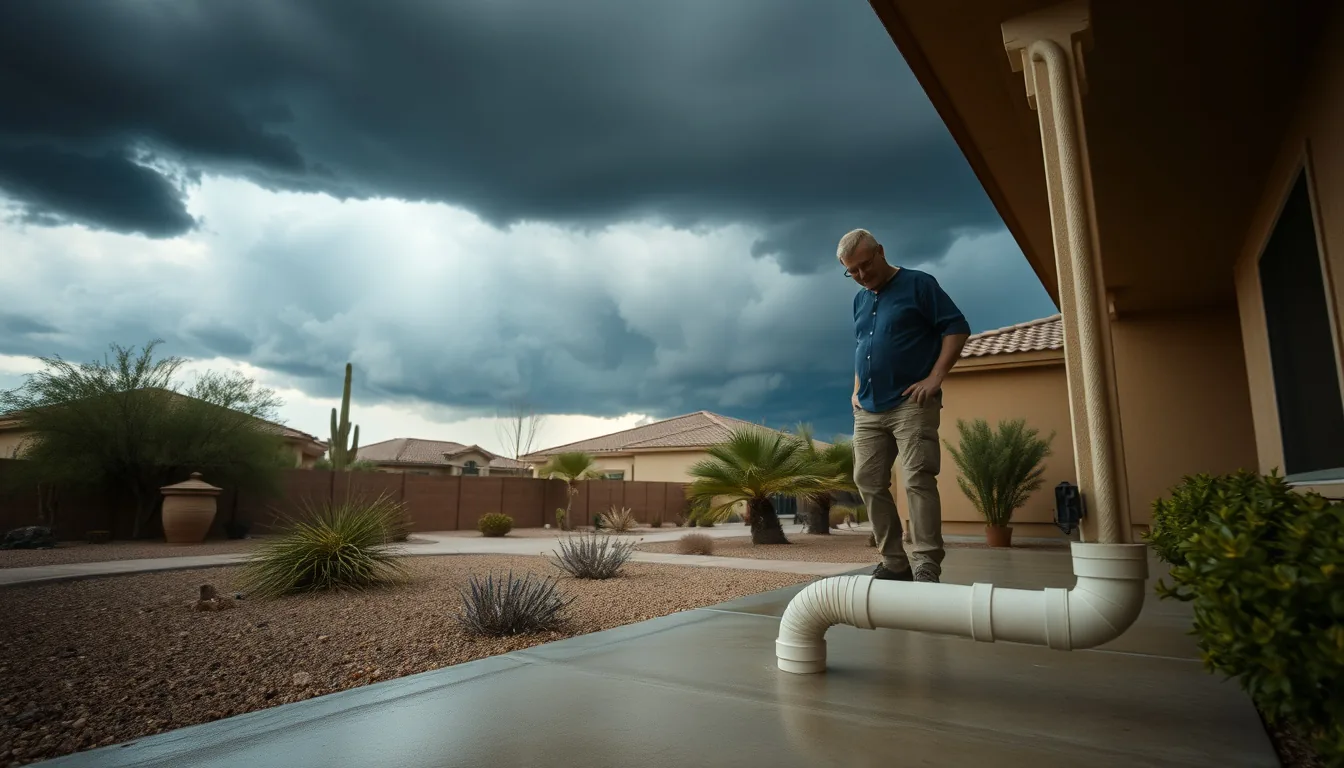
- Scupper and downspout discharge. Arizona roofs concentrate rainfall into a few outlet points. When a scupper dumps onto the corner of a patio or driveway, each storm excavates a little more base material.
- Negative slope. A slab that has settled toward the house or toward the pool funnels every storm against the stem wall or into the deck's backfill — feeding the very settlement that created the bad slope.
- Curb and edge scour. Flash flow along gutters and curb cuts strips the subgrade from under sidewalk flags and driveway aprons, one storm at a time.
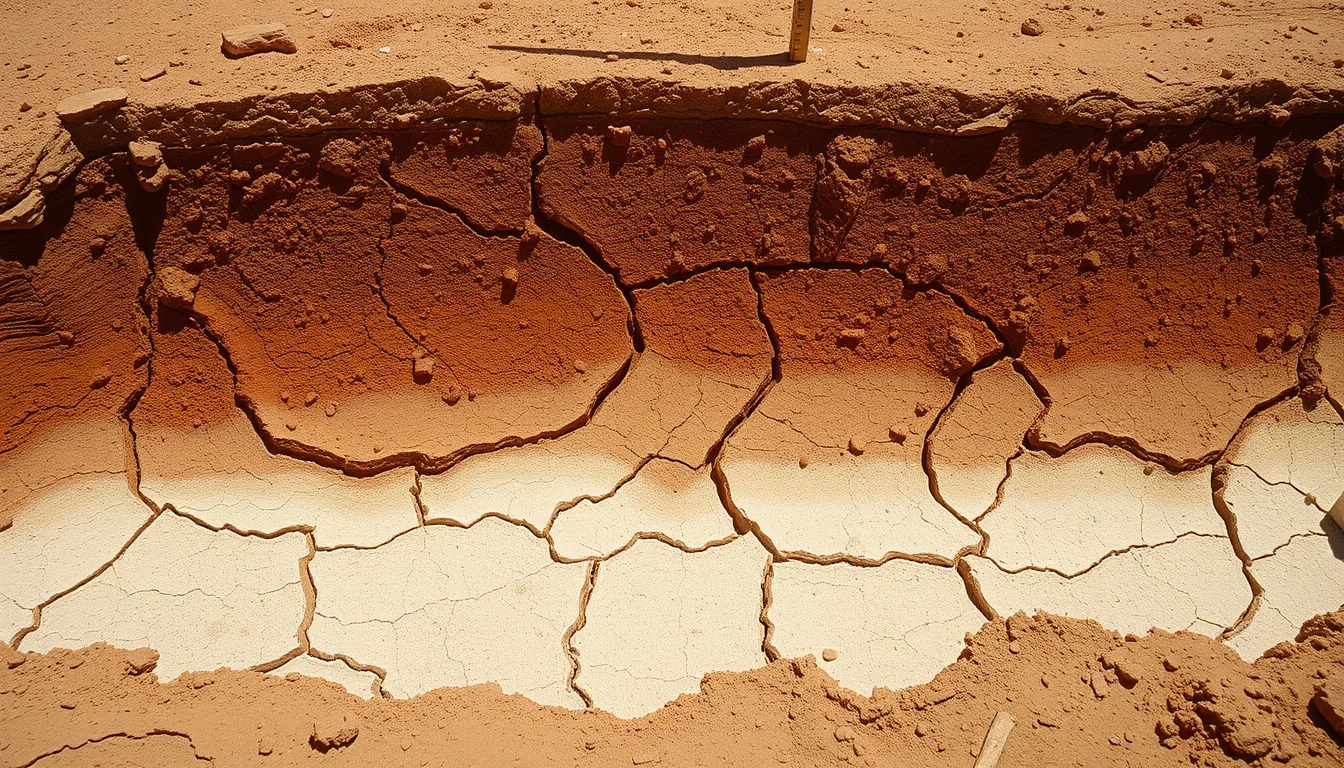
Under the slab, that water triggers Arizona's signature failure: collapsible desert soil that holds firm while dry, then compacts suddenly on first wetting. One good storm can finish what fifteen dry years never started.
The Pre-Monsoon Walk-Around Checklist
Take twenty minutes in late May or early June and walk every slab on the property. Look for these:
- Open expansion joints — if you can see soil or daylight down a joint, it needs backer rod and sealant before the first storm
- Cracks wider than a credit card — sealable now, a water highway later
- Gaps between slab and house — the joint where patio meets stem wall is the most damaging leak point on the lot
- Scupper and downspout landing zones — discharge should land on splash blocks or extensions, never on bare soil at a slab edge
- Slabs that pond or tilt toward the structure — mark where water sits after you hose the slab off; that is where it will sit in August
- Sunken sidewalk flags and driveway aprons — any edge of a quarter inch or more is both a trip hazard and a sign the base is already moving
- Hollow sounds underfoot — tap suspicious areas with a broom handle; a drum-like sound means a void is already forming
- Erosion trails or exposed slab edges — visible undercutting at the perimeter of any slab
- Deck drains and yard drains — flush them; a clogged deck drain sends storm water straight into the pool deck's backfill
- Irrigation overspray on hardscape edges — daily wetting along a slab edge does the monsoon's work in slow motion
Ten items, twenty minutes, and you have found ninety percent of what the season would otherwise exploit.
Joint and Crack Sealing: DIY or Pro?
Small, clean cracks and short joint runs are honest DIY work: a backer rod, a quality polyurethane sealant, and a caulk gun will beat an open joint every time. Where a pro earns the money is volume and prep — long joint runs, joints that have failed repeatedly, wide cracks that need routing, and the house-to-slab joint where getting the detail wrong sends water exactly where you cannot afford it. Sealing is also standard finish work on every lifting job we do, because leaving a freshly lifted slab with open joints is leaving the tap running.
Drainage Fixes That Pay for Themselves
The cheapest concrete repair is the storm water you redirect:
- Downspout and scupper extensions that carry discharge past the slab edge to soil that can take it
- Splash blocks under every roof outlet that lands near hardscape
- Regrading planter beds and gravel so surface flow moves away from slabs, not along them
- Slope correction by lifting — when a settled patio drains toward the house, foam injection restores positive slope away from the structure, turning the slab itself back into a drainage asset
After the Storm: The Void Warning Signs
When a big cell rolls through Phoenix, Queen Creek, or Tucson, give your concrete a five-minute check the next day. Three signs say water got underneath:
- A hollow, drum-like sound where the slab used to sound solid
- A sudden edge drop or new crack that appeared overnight
- Water disappearing under a slab edge instead of running off — the surest sign there is empty space below
A void is settlement on layaway. Filling one before the slab drops costs a fraction of lifting the slab after it cracks.
Why September and October Are Inspection Season
Every monsoon leaves a mark somewhere. That is why the weeks right after the season closes on September 30 are the smartest time to have hardscape professionally checked — the damage is fresh, the voids have not yet become drops, and repairs made in fall face eight dry months to prove themselves before the next test. From Phoenix to Buckeye to Flagstaff, we book post-monsoon void inspections every fall for exactly this reason.
Get Ahead of the Season
Walk the checklist yourself — and if you find open joints, hollow spots, or slabs already leaning the wrong way, have them handled before June 15 instead of after the first flood advisory. We inspect for free statewide, seal what needs sealing, fill voids before they become drops, and lift what has already moved.
Call 844-967-5247 and put your concrete on the right side of monsoon season.
Ready for a real number?
Free estimates statewide — measured on site, fixed price before any drilling starts.