Concrete Lifting in Arizona: 2026 Cost Guide — Polyjacking vs Mudjacking vs Replacement
Sunken concrete is one of the most common repair calls in Arizona — and one of the most misquoted. Homeowners in Phoenix, Queen Creek, and Buckeye get told everything from "a few hundred bucks" to "tear it all out and start over," often for the same driveway. The truth sits in the middle, and it depends on which method you choose, how far the slab has dropped, and what Arizona's soil has been doing underneath it.
This guide lays out real 2026 numbers for the three ways to deal with settled concrete — polyjacking, mudjacking, and full replacement — plus the project-by-project cost bands we see across the state, from Phoenix pool decks to Tucson sidewalks to Flagstaff driveways coming out of a freeze-thaw winter.
The Quick Answer: 2026 Arizona Concrete Lifting Costs
If you only read one section, read this one. Here is where pricing lands in Arizona right now:
- Polyjacking (polyurethane foam injection): $5 to $25 per square foot, with most jobs averaging around $15
- Mudjacking (cement slurry pumping): $3 to $6 per square foot
- Full replacement: typically 2 to 4 times the cost of lifting the same slab
- Average Arizona leveling project: around $1,200 all-in, with most jobs falling between $661 and $1,868
- The extremes: a small single-slab lift can run as little as about $325, while large, deeply settled projects can reach $3,700 or more
Those per-square-foot ranges are wide on purpose. A slab that has dropped half an inch over solid soil costs far less to lift than a slab that has dropped three inches over a washed-out void that swallows material. Which brings us to the real question.
What Actually Drives Your Price
Square footage is the least important number on your estimate. When our crews price a job in Phoenix or Tucson, four factors do almost all of the work:
- Lift height. Raising a slab a quarter inch and raising it three inches are entirely different jobs. Material volume grows fast as lift height increases.
- Void volume. Arizona's monsoon washouts and collapsing desert soils leave empty space under slabs. Every cubic foot of void has to be filled before the slab moves an inch, and you cannot see void volume from the surface.
- Access. A front driveway is easy. A pool deck behind a block wall, or an interior garage slab, takes more setup and more careful work.
- Slab condition. A sound slab in one or two large pieces lifts beautifully. A slab shattered into a dozen fragments may not be worth lifting at all — and an honest contractor will say so.
This is exactly why a per-square-foot quote over the phone is a guess dressed up as a price. Any number given before someone has measured the settlement and sounded the slab for voids should be treated as a placeholder. Reputable Arizona contractors inspect first and quote a fixed price second.
Polyjacking Deep Dive: The Modern Standard
Polyjacking — also called polyurethane concrete lifting or foam jacking — injects a two-part expanding polyurethane foam through small holes drilled in the slab. The foam expands within seconds, fills the voids, and lifts the concrete in controlled, monitored increments.
The numbers that matter:
- Holes: about 5/8 of an inch — roughly the size of a dime — patched with color-matched mortar when we finish
- Cure time: the foam typically reaches around 90 percent of its strength in about 15 minutes; you can walk on the slab immediately and drive on it the same day
- Weight: the cured foam weighs roughly 2 pounds per cubic foot, so it adds almost nothing to the load on the soil below
- Durability: closed-cell, waterproof, and chemically inert — it does not shrink, rot, or wash out in monsoon flow
That weight figure deserves a second look, because it is the single biggest reason foam wins in Arizona. Your slab sank because the soil beneath it failed under load. Pumping a hundred-plus pounds per cubic foot of wet slurry on top of soil that already failed is asking the same weak ground to carry dramatically more weight. Foam lifts the slab without re-loading the problem.
Polyjacking costs more per square foot than mudjacking. It is also, for most Arizona slabs, the last time you will pay to fix that concrete.
Mudjacking Deep Dive: The Old Way, and When It Still Makes Sense
Mudjacking has been around for the better part of a century. A crew drills holes typically 1 to 2 inches across, then pumps a slurry of cement, soil, and water under the slab until hydraulic pressure floats it back up.
The honest numbers:
- Holes: typically 1 to 2 inches — large enough to stay visible, especially on decorative or exposed-aggregate finishes
- Cure time: the slurry generally needs 1 to 3 days before the slab can take traffic
- Weight: cured slurry runs 100 or more pounds per cubic foot — as heavy as the concrete it is holding up
- Lifespan: commonly 5 to 10 years before re-settlement, because the material is both heavy and erodible
That erodibility is the Arizona-specific problem. Mud slurry is, at the end of the day, a soil-cement mix, and monsoon water moving under a slab can scour it the same way it scoured the original base. In Phoenix and Tucson, where the June 15 to September 30 monsoon delivers a third to half of the year's rain in violent bursts, an erodible repair has a hard ceiling on its life expectancy.
So when does mudjacking still make sense? When the budget is tight, the soil is stable and well-drained, and the time horizon is short — a slab you plan to replace in a few years anyway, or a rental turnover where a functional lift today matters more than a decades-long fix. It is a legitimate tool. It is just not the default answer in this state anymore.
Replacement Deep Dive: The True All-In Cost
Tear-out and re-pour has its place, but the sticker price contractors quote rarely captures the whole picture. Full replacement in Arizona means:
- Demolition — and in much of the Phoenix and Tucson valleys, that means jackhammering through caliche, the calcium-carbonate hardpan that behaves like natural concrete and turns a half-day demo into a multi-day fight
- Haul-off and disposal of the broken slab
- Forming and re-pouring the new concrete
- Cure time — days before foot traffic, and typically a week or more before vehicles, with hot-weather pours in an Arizona summer demanding extra care against rapid moisture loss and shrinkage cracking
- Finish mismatch — a new pour will never match the color and texture of the surrounding original concrete, and it can never reproduce a Kool Deck, stamped, or acrylic finish that took decades to patina
Add it up and replacement routinely lands at 2 to 4 times the cost of lifting the same slab — before you count the landscaping, gates, and irrigation lines that get torn up along the way.
And here is the part most homeowners never hear: the new slab gets poured on the same soil that swallowed the old one. Unless the underlying settlement cause is fixed, replacement is often just a more expensive way to schedule the next settlement.
Replacement is genuinely the right call when the slab itself is destroyed — shattered into many small pieces, badly spalled, or poured too thin to begin with. Lifting a broken slab just levels the rubble. A trustworthy estimator will tell you which side of that line your concrete is on.
Cost by Project Type in Arizona
Here is where 2026 pricing lands for the most common Arizona projects, using typical surface sizes:
- Two-car driveway (about 450 sq ft): roughly $1,500 to $3,000 with mudjacking, or $3,200 to $7,500 with polyurethane foam — versus a full replacement that routinely runs 2 to 4 times the lifting price
- Sidewalk section (about 100 sq ft): roughly $320 to $650 mudjacked, or $650 to $2,700 with foam — often just a few hundred dollars per raised flag
- Two-car garage floor (about 400 to 576 sq ft): roughly $1,250 to $2,700 with mudjacking, or about $2,500 to $5,400 with foam — and indoors, foam is realistically the only clean option
- Patio (about 200 to 400 sq ft): scales between the sidewalk and driveway bands; restoring positive drainage slope away from the house is usually the real goal
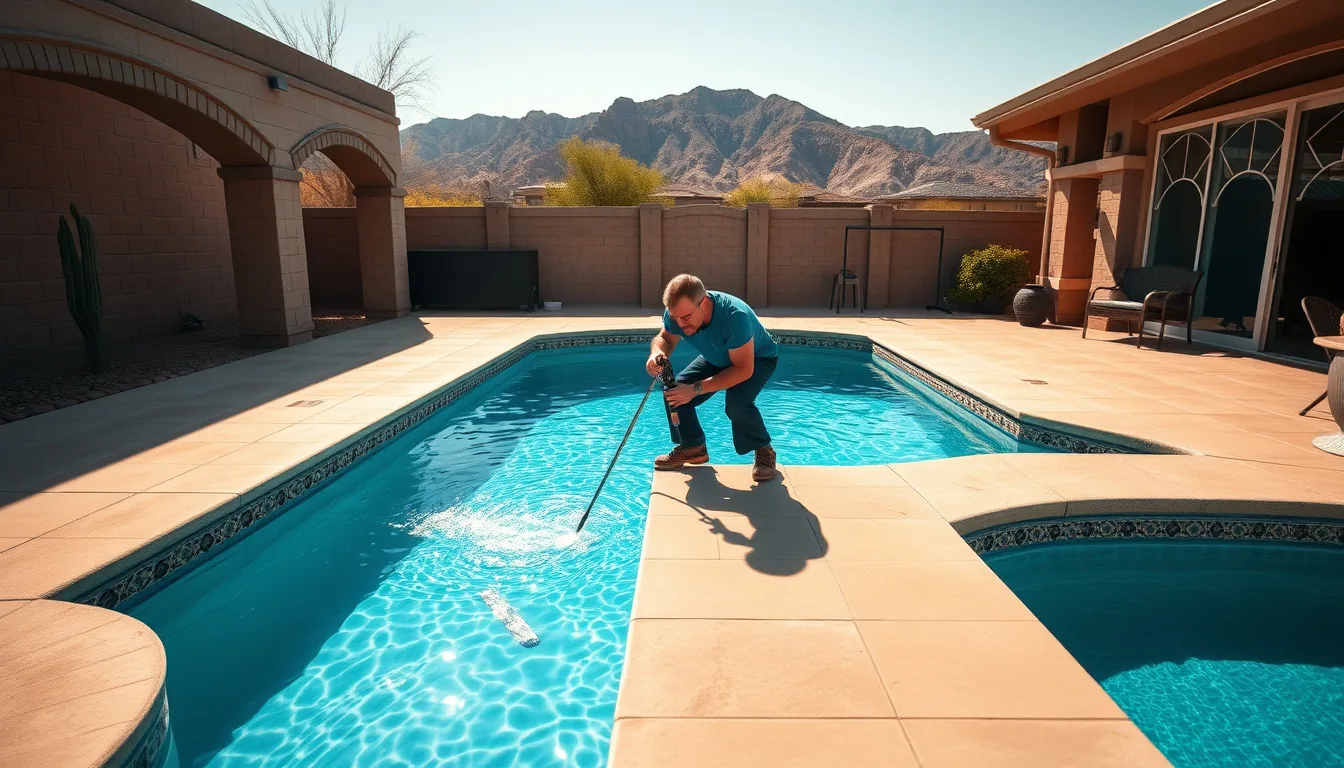
- Pool deck (about 300 to 800 sq ft): priced on inspection, because decks sit on backfilled excavation with unpredictable void volume — and lightweight foam is nearly always the right method over that fill
Every one of those ranges moves with lift height and void volume, which is why we put eyes and instruments on the slab before we put a number on paper.
The Arizona Multiplier: Why Our Soil Changes the Math
National cost articles treat concrete settlement as a generic problem. Arizona is not generic. Four forces make slabs here sink differently — and make lightweight repair materials matter more:
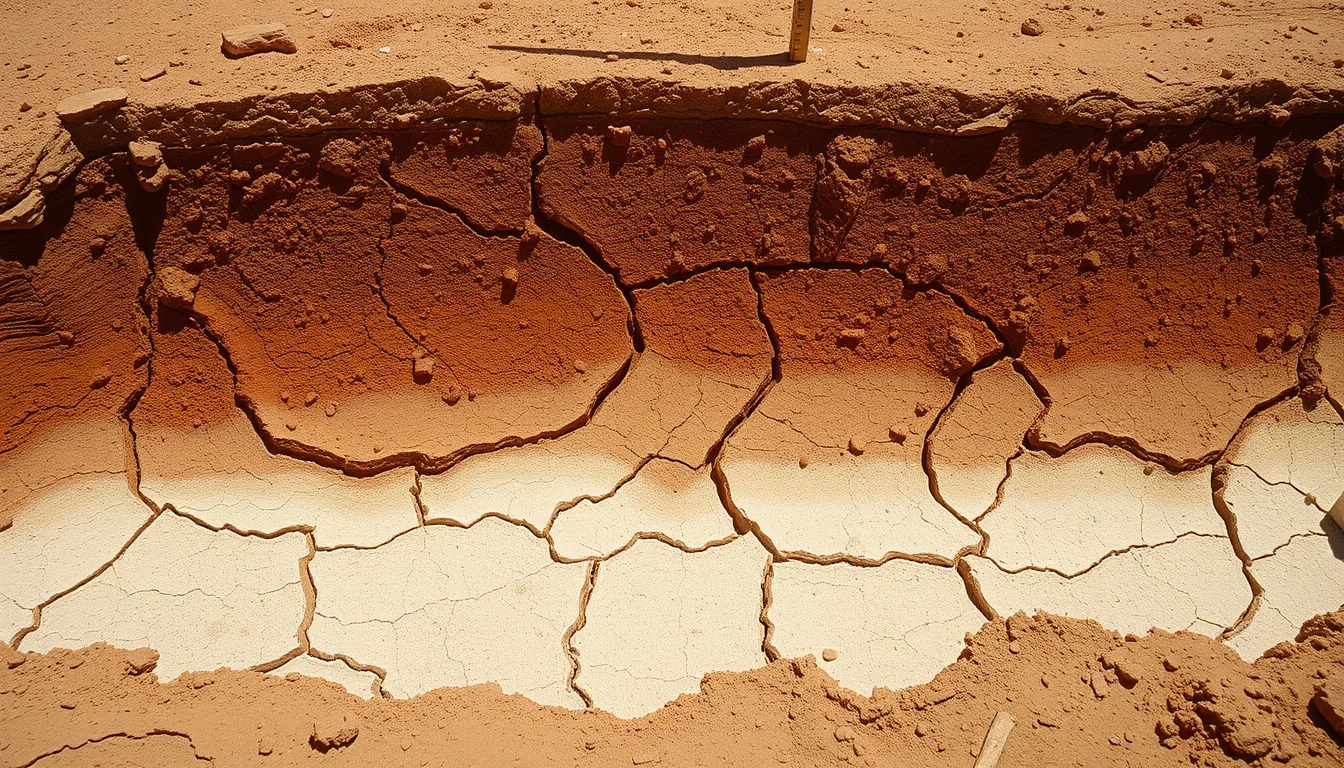
- Collapsible soils. Much of the state's valley floor is loose alluvial sediment that holds its shape while bone-dry, then compacts suddenly the first time irrigation, a plumbing leak, or monsoon rain soaks it. This is why a slab can sit perfectly for 15 years and drop the season you add a drip line.
- Caliche. Hard calcium-carbonate lenses sit next to soft soil pockets, so slabs bear unevenly and settle differentially. Caliche also makes excavation brutal, which quietly inflates every replacement bid in the state.
- Regional subsidence. According to the Arizona Geological Survey, more than 3,000 square miles of Arizona land has measurably sunk from decades of groundwater pumping, with about 169 miles of confirmed earth fissures mapped across the state and up to 5.6 feet of sinking recorded near Wenden since 1991.
- The monsoon. From June 15 to September 30, storm bursts scour base material from under slab edges, overwhelm scuppers and deck drains, and deliver the first-wetting trigger that collapsible soils have been waiting for.
Fast-growing communities feel this first. Queen Creek and Buckeye are perennial national leaders in housing growth, and new subdivisions sit on engineered fill that is compacted carefully under foundations — but driveways, patios, and walks often ride on trench backfill and loosely returned lot-edge soil that consolidates in the first two to seven years. That is exactly when the driveway drops at the garage apron.
The physics lesson for pricing: on soil that failed under load, the weight of the repair material is not a detail. It is the whole game. Foam at roughly 2 pounds per cubic foot works with Arizona soil. Slurry at 100-plus pounds per cubic foot works against it.
The Longevity Math: Cost Per Year of Service
Sticker price is the wrong lens. Cost per year of service is the right one. Run the numbers on a typical driveway:
- Mudjacking at $2,200 with a realistic 5 to 10 year life works out to roughly $220 to $440 per year — and you will likely pay again, at future prices, when it re-settles.
- Polyjacking at $5,000 with a lift that is effectively permanent — inert, waterproof foam that does not wash out — amortizes to a fraction of that over a couple of decades of service.
- Replacement at $8,000 to $12,000 buys new concrete on the same unstable soil, which means the clock on the next settlement starts the day the forms come off.
Foam costs more on the day of the job and less every year after. Mud costs less on day one and more every year after. In a state where the soil actively attacks heavy, erodible repairs every monsoon season, that trade is rarely close.
How to Vet an Arizona Concrete Lifting Contractor
Whoever you hire — us or anyone else — hold them to this checklist:
- ROC license. Arizona requires a Registrar of Contractors license for this work: C-9 for commercial concrete, R-9 for residential, or CR-9 dual. The classification covers placing, finishing, repairing, grouting, and sealing concrete, and it requires four years of trade experience plus exams. Verify the license number on the ROC website before you sign anything.
- Written warranty terms. Get the length and the exclusions in writing, and ask specifically what happens if the slab re-settles.
- Injection logging. Good crews record where they injected, how much material went in, and the before-and-after elevations. If a contractor cannot show you a lift log, they are guessing.
- Drainage remediation. Settlement has a cause, and in Arizona the cause is almost always water. A repair quote that does not address joints, cracks, scupper discharge, or slope is treating the symptom and scheduling the relapse.
- An honest no. Ask what they will not lift. A contractor who has never recommended replacement, or never referred a foundation problem to an engineer, is selling, not diagnosing.
Frequently Asked Questions
How much does concrete lifting cost in Arizona?
Most residential projects land between roughly $661 and $1,868, with an average around $1,200. Small single-slab lifts can run as little as about $325, while large or deeply settled projects can reach $3,700 or more. Price is driven by lift height and void volume more than square footage, which is why credible quotes come from an on-site inspection.
How much does polyjacking cost per square foot?
Polyurethane lifting typically runs $5 to $25 per square foot depending on lift height and void volume, versus $3 to $6 for mudjacking. Foam costs more per foot but lasts decades instead of 5 to 10 years, so it is usually the cheaper option per year of service.
Is lifting cheaper than replacing the concrete?
Almost always. Leveling generally runs a fraction of tear-out and re-pour — replacement is routinely 2 to 4 times the price of lifting — and you keep your existing finish, whether that is Kool Deck, stamping, or exposed aggregate. Replacement also means demolition mess, weeks of disruption, and in much of Arizona, jackhammering through caliche.
What is the difference between polyjacking and mudjacking?
Mudjacking pumps a heavy cement-and-soil slurry through holes typically 1 to 2 inches across and needs 1 to 3 days to cure. Polyjacking injects expanding polyurethane foam through holes about 5/8 of an inch and cures in about 15 minutes. The foam weighs roughly 2 pounds per cubic foot versus 100-plus pounds for slurry, so it does not re-load the weak soil that caused the sinking in the first place.
How long does the foam take to cure?
The foam reaches roughly 90 percent of its strength in about 15 minutes. You can walk on the slab as soon as the crew finishes and drive on it the same day. Mudjacking slurry, by contrast, typically needs 24 to 72 hours before it can take traffic.
How big are the injection holes?
About 5/8 of an inch — the size of a dime — and we patch them with color-matched mortar before we leave. Mudjacking requires holes typically 1 to 2 inches across, which stay visible, especially on decorative finishes.
How long does polyurethane concrete lifting last?
The foam is inert, closed-cell, and waterproof — it does not shrink, rot, or wash out, so the lift itself is effectively permanent. Mudjacking commonly fails in 5 to 10 years because the slurry is heavy and erodible. If soil keeps moving under any repair, the cause is water and drainage, which is why we address both at the same visit.
When is full replacement the right call?
When the slab itself is destroyed — shattered into many small pieces, badly spalled, or poured too thin. Lifting a broken slab just levels the rubble. As a rule of thumb, a slab cracked into a few large, sound pieces is a lifting candidate; a slab in fragments is a replacement job, and we will tell you which one you have.
Get a Firm Number, Not a Phone Guess
Every driveway, patio, pool deck, and warehouse floor settles differently, and the honest price lives under the slab where nobody can see it from the curb. We inspect and quote for free anywhere in Arizona — Phoenix, Tucson, Flagstaff, and everywhere between. We measure the actual settlement, sound for voids, and hand you a fixed price before a single hole gets drilled.
Call 844-967-5247 for a free on-site estimate, or send us photos of the slab and we will tell you straight whether lifting, mudjacking, or replacement is the right money to spend.
Ready for a real number?
Free estimates statewide — measured on site, fixed price before any drilling starts.