Pool Deck Sinking? What Every Arizona Pool Owner Should Know Before Replacing It
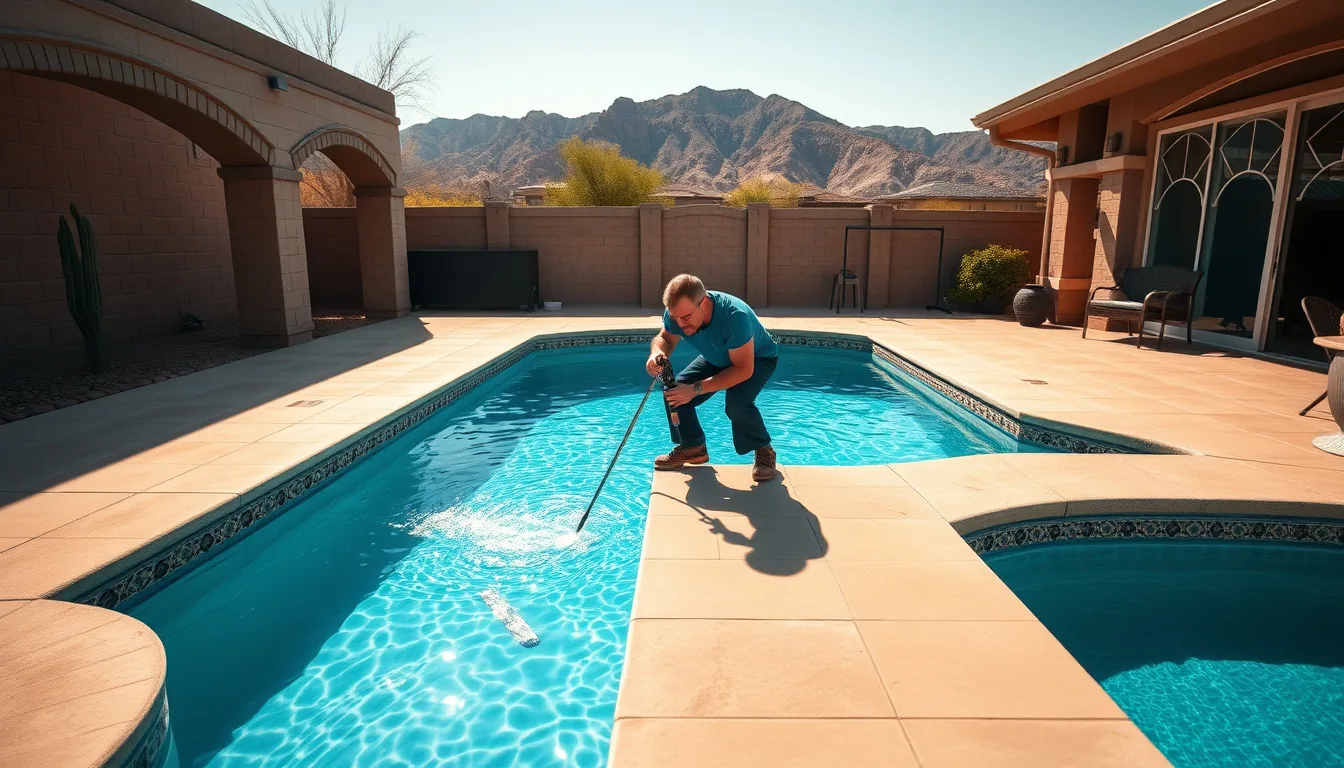
Roughly 1 in 3 single-family homes in the Phoenix area has a pool — the highest concentration in the country. That is hundreds of thousands of backyards with the same hidden detail: a concrete deck poured over the loosest soil on the entire property. Which is why the sunken pool deck is Arizona's most common settlement casualty, and why so many homeowners get talked into a tear-out they never needed.
Before you let anyone jackhammer your backyard, here is what is actually happening under that deck — and the repair math that usually points the other way.
Why Pool Decks Sink: You Are Standing on the Over-Dig
When your pool was built, the crew excavated a hole several feet larger than the shell itself. After the shell went in, that surrounding gap — the over-dig — was backfilled and compacted as well as a tight, wet, awkward trench allows. Which is to say: not very well. Then the deck was poured right on top of it.
That backfill spends the next decades slowly consolidating, helped along by everything a pool does:
- Splash-out soaking the first two feet of deck edge, day after day, all season
- Deck drains that clog or leak, sending water into the fill instead of away from it
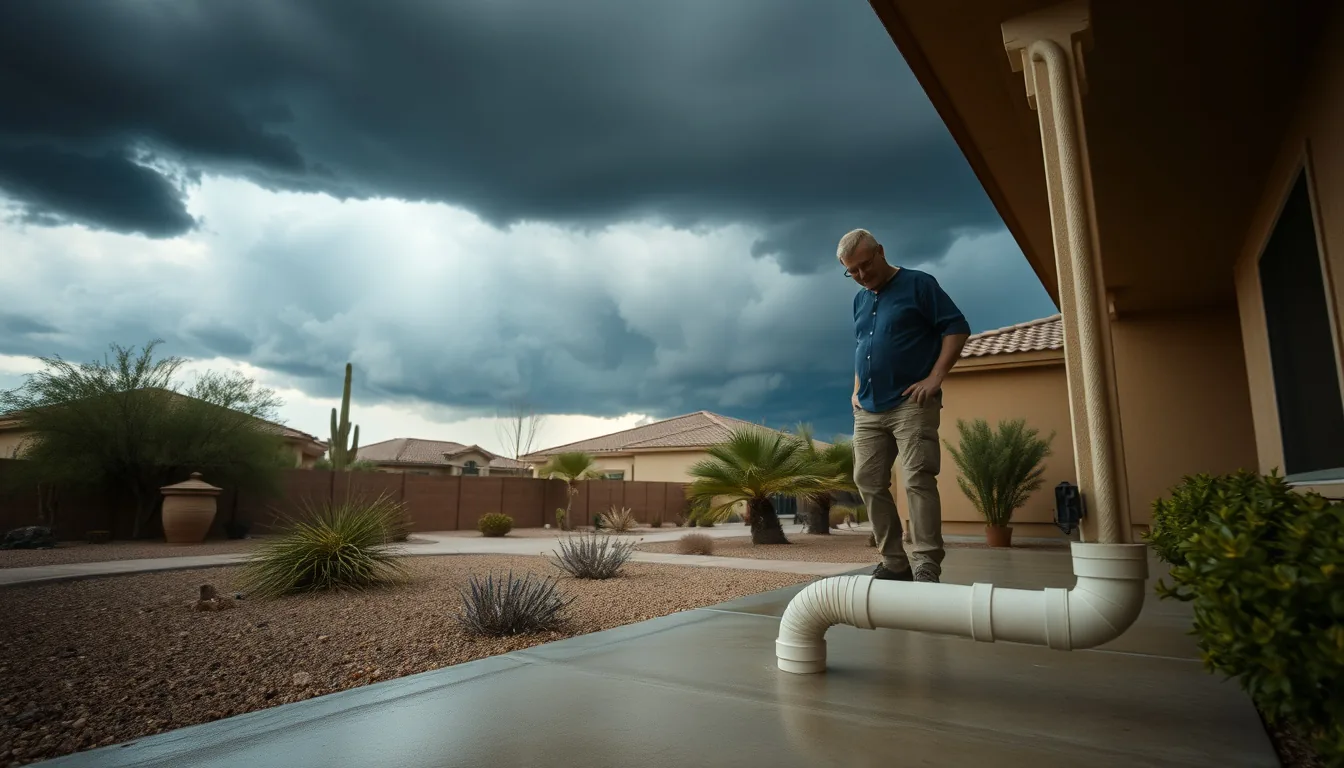
- Monsoon bursts from June 15 to September 30 that overwhelm drains and dump sheets of water straight into the over-dig
- Arizona's collapsible soils, which hold firm while dry and compact suddenly the first time they get soaked
The deck does not sink because the concrete failed. It sinks because it was floored over a trench that is still settling.
The Danger Signs — and Why They Matter More on a Pool Deck
Around a pool, settlement is not cosmetic. Watch for:
- Slabs tilting toward the pool. This reverses the deck's drainage design, sending dirty deck runoff, landscape water, and storm flow into the pool — and under the shell, where it keeps consolidating the fill.
- Raised edges and trip lips. A quarter-inch vertical edge is a recognized trip hazard on any walkway. On a wet deck crossed by barefoot kids moving at a dead run, it is a genuine injury risk, not a technicality.
- Opened expansion joints and failed mastic. The joint between deck and pool coping is the front door for water headed into the over-dig. Once the sealant splits, every splash feeds the settlement.
- Hollow sounds and sudden drops after storms. Both mean voids — empty space under the slab that has not finished collapsing yet.
Why Replacement Destroys More Than It Fixes
Tear-out sounds decisive, but on a pool deck it carries costs the bid never itemizes:
- Your finish dies with the slab. Kool Deck, acrylic lace, stamped overlays, and vintage textures cannot be matched by a new pour. Decades of color and patina disappear, and a partial replacement leaves an obvious scar between old and new.
- Demolition in a finished backyard. Jackhammers, bobcats, and haul-out paths through gates, past pool equipment, over irrigation and landscape lighting — the collateral damage is real.
- Pool-barrier code re-inspection. Deck replacement can trigger a fresh look at barrier compliance — fence heights, gate latches, door alarms — under today's standards. Plenty of owners have turned a deck project into a fence project without meaning to.
- The new deck sits on the same fill. Unless someone excavates and re-compacts the over-dig — which nobody does under a finished pool deck — the replacement is poured over the exact soil that swallowed the original.
The Weight Problem: Why Slurry Is Wrong Over Backfill
Old-style mudjacking pumps a cement-and-soil slurry weighing 100 or more pounds per cubic foot under the slab. Think about what that means over an over-dig: the soil failed under the deck's existing weight, and the fix adds a dense new layer of load on top of it. Slurry is also erodible — the same monsoon water that caused the settlement can wash the repair out — and it goes in through holes typically 1 to 2 inches across, which never disappear on a decorative deck.
Polyurethane foam flips every one of those factors:
- About 2 pounds per cubic foot cured — it lifts the deck without meaningfully re-loading the fill
- Closed-cell and waterproof — splash-out and storm water cannot dissolve it
- Injected through holes about 5/8 of an inch — dime-sized, patched to blend, even through decorative finishes
- Cured in about 15 minutes — the deck takes foot traffic the same hour, and you can realistically swim the same day
Over backfilled excavation, lightweight is not a preference. It is the only method that respects the physics of what the deck is sitting on.
What the Fix Actually Looks Like
A typical Arizona pool deck lift is a half-day, not a demolition week. The crew maps the settlement with a level, drills a pattern of dime-size holes in the affected slabs, and injects expanding foam in small, monitored lifts — watching gauges and joint lines so the deck comes up evenly and stops exactly at grade. Holes get patched with color-matched mortar, joints get cleaned and resealed, and the backyard is yours again by afternoon. No haul-off, no barrier re-inspection, no scar where old concrete meets new.
Keeping It Fixed
The lift solves the elevation. Water management keeps it solved:
- Replace failed joint mastic between deck and coping, and at every expansion joint, so splash-out stays out of the fill
- Keep deck drains flowing — flush them each spring before the monsoon, and fix crushed or separated drain lines
- Mind the landscape edge — sprinklers and drip emitters aimed at the deck perimeter quietly re-soak the over-dig
The Cost Comparison That Settles It
Deck replacement in Arizona routinely runs 2 to 4 times the cost of lifting the same concrete — before counting finish loss, landscape damage, and code complications. Lifting is priced per project based on lift height and void volume, typically lands at a fraction of tear-out, and preserves the deck you already paid for. On the most common backyard repair in the state, the math is rarely close.
If your deck is tilting toward the water, drumming hollow underfoot, or growing trip lips at the joints, get it measured before you get it demolished. We inspect pool decks for free across Arizona — Phoenix, Queen Creek, Tucson, and beyond — and give you a straight answer on lifting versus replacement.
Call 844-967-5247 and keep your deck, your finish, and your backyard intact.
Ready for a real number?
Free estimates statewide — measured on site, fixed price before any drilling starts.